_
Tag: capability
-

EA… Wait… What?
Post date:
If you spend enough time in Enterprise Architecture, you will eventually encounter a curious phenomenon. Almost everyone supports the idea of Enterprise Architecture. Almost nobody agrees on what it actually is. Some executives believe Enterprise Architecture is primarily about technology standards. Others expect it to deliver target architectures within weeks. Some see it as an…
-
The Modern Enterprise Architect
Post date:
There was a time when the Enterprise Architect was easy to identify. They were the ones with the largest diagrams. The most boxes and arrows. The most opinions about standards. They could quote frameworks like scripture and had a sixth sense for spotting an unauthorized integration. If something wasn’t aligned to the target architecture, they…
-
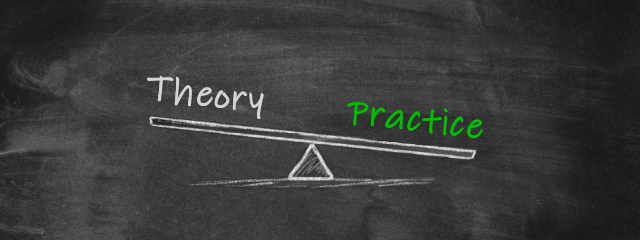
More Practicality, Less Theory
Post date:
Enterprise Architecture frameworks are rarely questioned at the conceptual level. Most architects accept their value. Many organizations reference them explicitly. Certifications remain popular, methods are well known, and the language of architecture has become increasingly standardized across the profession. Yet something interesting happens when these frameworks enter daily practice: the translation becomes challenging, resulting in…
-
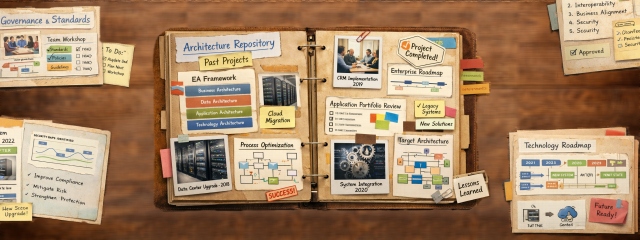
A Scrapbook of Past Projects
Post date:
Enterprise Architecture has a reputation problem. Not because it lacks rigor or structure — quite the opposite. But because too often, architecture feels like something that exists next to the organization rather than within it. Diagrams live in tools, standards sit in documents, and architectural knowledge slowly fragments across folders, platforms, and people’s heads. It's…
-
Architecting with AI
Post date:
Artificial Intelligence is often portrayed as a disruptive force — one that demands new methods, tools, and frameworks. But in practice, AI doesn’t replace traditional architecture frameworks. Instead, it enhances them. This is especially true when it comes to the TOGAF Standard’s Architecture Development Method (ADM). Rather than rewriting the playbook, AI can act as…
-
EA: The Missing Puzzle Piece
Post date:
The words Enterprise Architecture often elicit a predictable reaction: a nod of polite acknowledgement, sometimes tinted by mild apprehension or indifference. Somewhere along the line, it became something that busily hums behind the scenes, tucked away in senior briefing decks or internal frameworks, occasionally referenced but rarely felt at the grassroots. Yet that quiet presence…
-
AI: More Buzzword Than Breakthrough
Post date:
Artificial Intelligence (AI) and Intelligent Automation (IA) are two terms that have become ubiquitous in today's world. Although they are often used interchangeably, they are distinct concepts, each with its own advantages and disadvantages. Unfortunately, there is a growing tendency to use the term "AI" as a catch-all phrase that obscures the fact that we're…