_
Tag: goals
-

The Modern Enterprise Architect
Post date:
There was a time when the Enterprise Architect was easy to identify. They were the ones with the largest diagrams. The most boxes and arrows. The most opinions about standards. They could quote frameworks like scripture and had a sixth sense for spotting an unauthorized integration. If something wasn’t aligned to the target architecture, they…
-
Creating Enterprise And Architecture Principles
Post date:
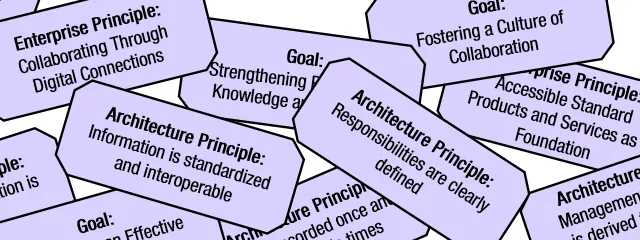
Within an Enterprise Architecture approach, principles serve as a foundation for designing flexible and scalable architectures that align with business goals and objectives. They ensure compliance with regulations and industry standards and are able to reduce complexity and duplication by enforcing standardization and interoperability. Principles provide clarity, consistency, and direction in decision-making, ensuring alignment between…
-
More Practicality, Less Theory
Post date:
Enterprise Architecture frameworks are rarely questioned at the conceptual level. Most architects accept their value. Many organizations reference them explicitly. Certifications remain popular, methods are well known, and the language of architecture has become increasingly standardized across the profession. Yet something interesting happens when these frameworks enter daily practice: the translation becomes challenging, resulting in…
-
Architecture Beyond Domains
Post date:
Enterprise Architecture has been around for decades. The discipline has profoundly shaped how organizations plan, align, and structure their strategies, systems, and operations. Frameworks such as the TOGAF Standard define four architecture domains and link them to specific architectural roles. While this approach has helped organizations organize work, it has also unintentionally reinforced rigid silos…
-
EA: The Missing Puzzle Piece
Post date:
The words Enterprise Architecture often elicit a predictable reaction: a nod of polite acknowledgement, sometimes tinted by mild apprehension or indifference. Somewhere along the line, it became something that busily hums behind the scenes, tucked away in senior briefing decks or internal frameworks, occasionally referenced but rarely felt at the grassroots. Yet that quiet presence…
-
AI-driven Architecture
Post date:
Today we cannot avoid AI. We see it mushrooming everywhere. Various applications are being experimented with, and every marginal result is eagerly shared on social media. This is also true for generative AI applications in architecture. So how great would it be if we could use AI to make our lives as architects easier? We…
-
The Misplaced Enterprise Architect
Post date:
The role of the Enterprise Architect is misplaced in many organizations. In nine out of ten cases, the Enterprise Architect is portrayed as an IT Architect. This misalignment has significant consequences for an organization. The primary role of the Enterprise Architect is to help an organization achieve its goals.